
Every day, your business generates massive amounts of data. You collect customer clicks, sales figures, and website logs. However, most of this valuable information sits unused in digital storage. Traditional tools simply cannot keep up with the sheer volume of modern data. Many teams spend days building reports, only to find the information is already outdated. To stay competitive, you need a faster, smarter way to understand your data. This is where artificial intelligence steps in to change how we make decisions.
What Is AI Analytics?
AI Analytics refers to the use of artificial intelligence to automate data processing, discover hidden patterns, and generate actionable insights. Instead of relying on manual human analysis, this approach uses smart technology to do the heavy lifting. Modern AI data analytics platforms handle everything from cleaning messy data to predicting future trends. In the past, companies used AI augmented analytics to help analysts find trends faster. Today, the technology does far more than just assist. It actively explores your data, answers complex questions, and even takes action on your behalf. This shift allows businesses to move from descriptive reporting to proactive decision making.
How Modern Data Tools Differ from Traditional Business Intelligence
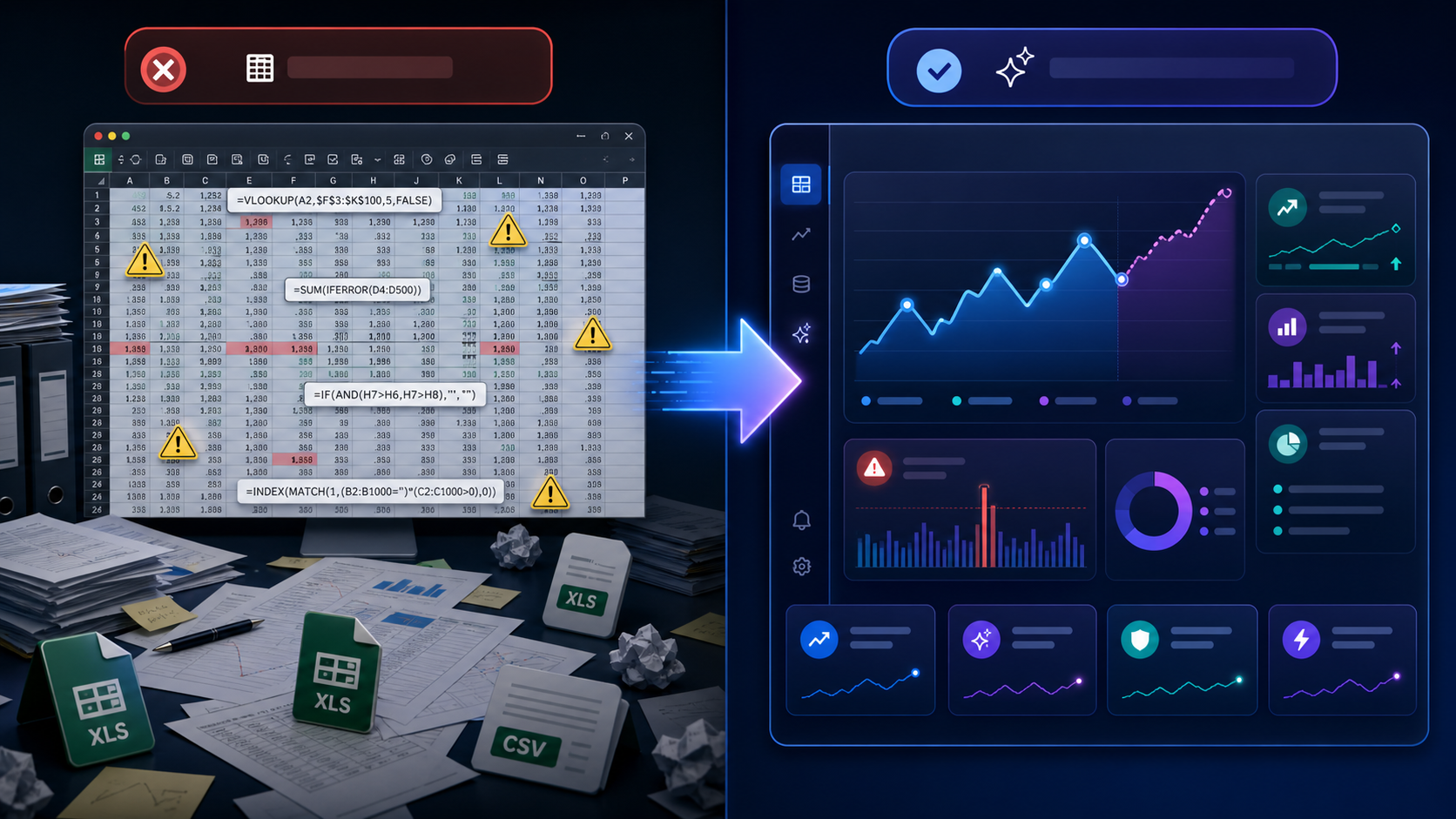
Traditional business intelligence and AI solutions serve very different purposes. Traditional business intelligence (BI) looks backward and tells you what happened last month or last quarter through static charts and reports. If you want to know why a metric changed, you must ask a data analyst, who then writes complex queries, downloads spreadsheets, and builds new reports. This manual process can take days or even weeks. In contrast, AI-native platforms look forward and work in real time. They do not just show you that sales dropped. They automatically investigate the data to find the root cause.
A national retail chain noticed a sudden drop in online checkout completions. Using traditional BI, the team spent three days analyzing user logs to find the issue. With an AI-powered platform, the system flagged the anomaly within minutes. It identified that a recent software update broke the payment gateway on mobile devices. The team fixed the bug immediately, saving thousands of dollars in lost sales.
Traditional business intelligence focuses on historical reporting, relies on manual SQL queries and batch processing, requires specialized data analysts, and often takes days or weeks to produce insights. AI-native analytics, on the other hand, uses automated data ingestion and real-time analysis, allows business users to ask questions using natural language, generates answers within seconds, and provides proactive alerts along with automated workflows.
The Core Technologies Powering Intelligent Analysis
Modern analytics platforms combine several advanced technologies to deliver automated insights. Understanding these core components helps you choose the right tools for your business.
Machine Learning and Predictive Modeling
At the heart of modern platforms are machine learning algorithms. These algorithms train on your historical data to find patterns that human eyes might miss. Once the system learns these patterns, it can perform predictive analytics. Predictive modeling helps you forecast future trends, such as customer churn or product demand. To get the most out of these models, it helps to understand the fundamentals of machine learning in business. This knowledge ensures your team sets realistic expectations for automated forecasting.
Natural Language Processing and Conversational Querying
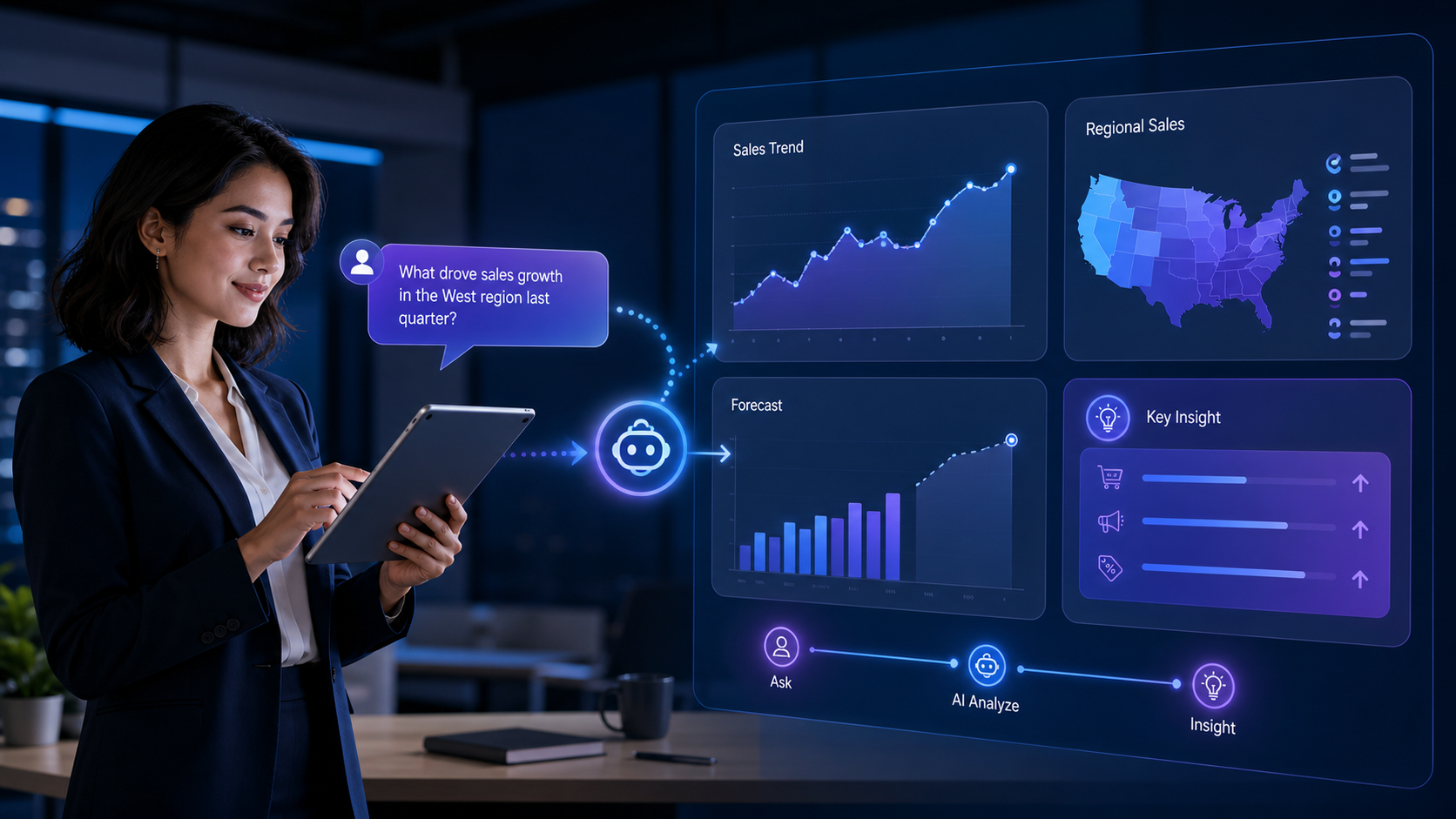
In the past, you needed to learn SQL or Python to query a database. Today, natural language processing in analytics removes this technical barrier. This technology lets you ask questions in plain English, just like you would ask a colleague. For example, you can type, "Which marketing channel had the highest return on ad spend last week?" The system understands your intent, queries the database, and returns a clear chart. This capability is key to democratizing data with AI across your entire organization.
Generative AI and Agentic AI in Modern Systems
The field is evolving rapidly beyond simple search queries. Generative AI for data analysis can now write summaries of complex reports and suggest business strategies. In the early days of modern data tools, augmented analytics helped users by highlighting interesting anomalies in charts. The system acted like a helpful assistant that pointed out where you should look. Today, we are moving toward agentic AI analytics. Agentic systems do not just point out problems; they actively work to solve them. For example, if the AI detects a sudden drop in website traffic, it can run diagnostic tests, check server logs, and draft an email to your web developer with the exact error code. You can learn more about this shift in our guide on the future of generative AI in enterprise settings.
Key Benefits of Implementing Automated Platforms
Implementing these modern tools offers massive advantages for businesses of all sizes. Traditionally, data was locked behind a gate kept by the IT department, and non-technical employees had to wait for custom reports. AI tools break down these silos by allowing sales representatives, marketing managers, HR teams, and other departments to access insights directly. This self-service model empowers everyone to make data-driven decisions without depending on technical teams.
Another major advantage is faster decision making. Waiting days for a report can mean missing valuable business opportunities. AI platforms provide real-time data insights directly through dashboards, enabling businesses to react immediately to changing market conditions, competitor activities, and customer behavior.
Real-World Use Cases and Industry Examples
Different industries use AI Analytics to improve efficiency and decision making. In the eCommerce sector, a major apparel brand used predictive tools to manage inventory by analyzing local weather forecasts, social media trends, and historical sales data. The AI predicted increased demand for rain gear in the Pacific Northwest and automatically alerted the supply chain manager to restock regional warehouses, increasing sales by twenty percent.
In healthcare, a regional hospital network used real-time insights to improve patient flow. By analyzing historical admissions and current flu outbreak data, the AI accurately predicted patient admissions for the following week. This enabled administrators to schedule doctors and nurses more efficiently, reducing patient wait times by thirty minutes.
Challenges in Smart Analytics: Data Quality and Governance
Although AI Analytics offers significant advantages, successful implementation requires high-quality data. Poor or incomplete data leads to inaccurate insights and unreliable predictions. In addition, generative AI systems may occasionally produce incorrect or misleading information. To reduce these risks, organizations should implement a governed semantic layer that ensures business metrics are consistently defined and interpreted.
A successful implementation begins with cleaning data by removing duplicate, incomplete, and outdated records. Organizations should establish a governed semantic layer so AI uses consistent business definitions and should maintain human oversight to review AI-generated recommendations before making important business decisions. For a deeper understanding of these practices, explore our guide on data governance and data quality best practices.
How to Choose the Right Intelligent Platform
Selecting the right AI Analytics platform depends on your business objectives and existing technology infrastructure. Choose a solution that integrates easily with your databases and cloud storage while providing a user-friendly conversational interface for non-technical users. It is also important to ensure the platform includes robust security features to protect sensitive customer and business data. If you require a customized solution, consider professional AI integration and software development services.
Conclusion: The Future of Automated Decision Making
The era of manual data analysis is rapidly coming to an end. AI Analytics is no longer a luxury reserved for large technology companies; it has become an essential business tool for organizations that want to remain competitive. By adopting intelligent analytics platforms, businesses can democratize access to data, predict future trends, improve operational efficiency, and make faster, more informed decisions. Start exploring AI Analytics today to unlock the full value of your business data and build a stronger foundation for future growth.