
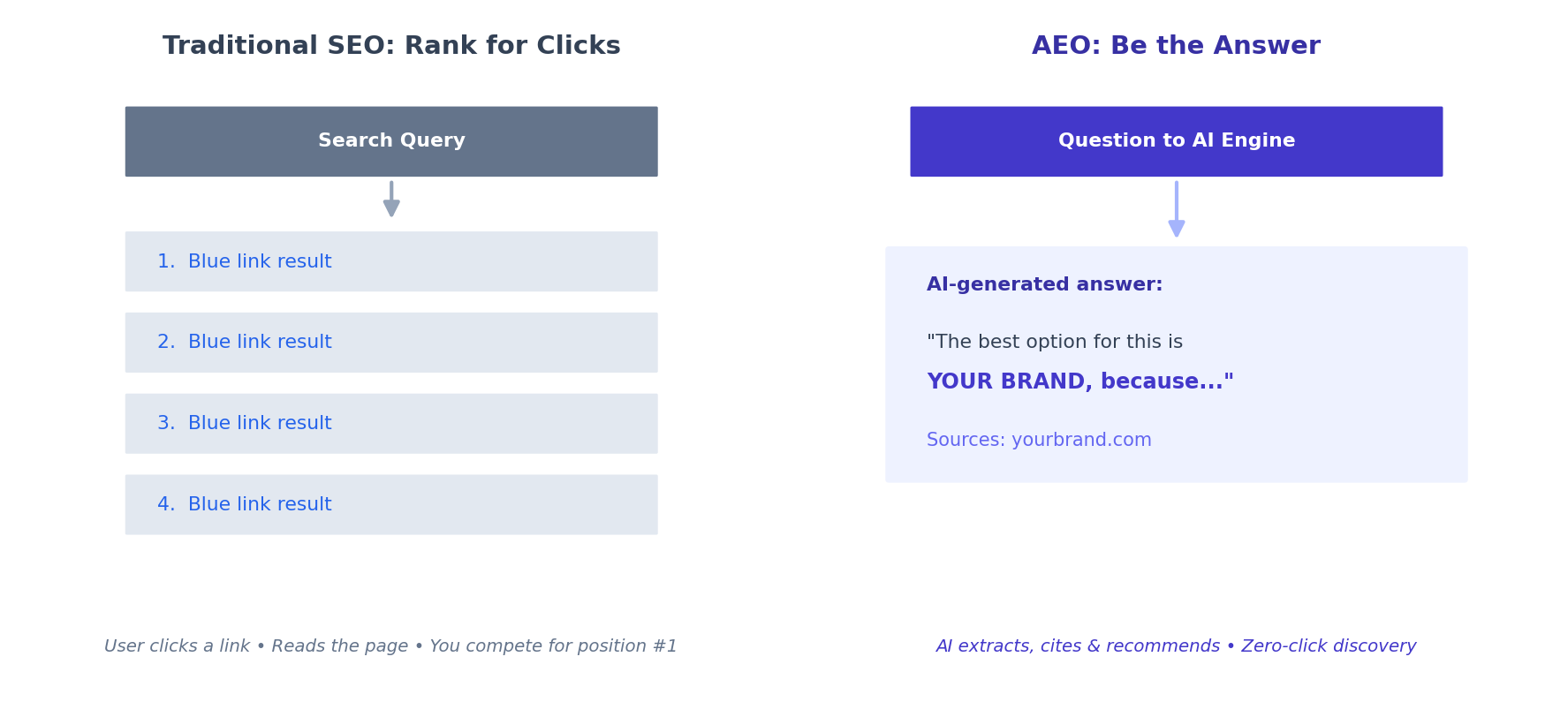
For twenty years, SEO had one obsession: the blue link. Marketers stuffed keywords into headers, calculated density percentages, and fought for position one on a results page. That playbook is collapsing, because the results page itself is disappearing.
Today, a buyer asks ChatGPT which platform to choose. They ask Perplexity to compare vendors. Google answers their question in an AI Overview before a single link renders. Discovery now happens inside AI engines, and those engines do not care about your keyword density. They care about whether your content can be extracted, trusted, and cited. Welcome to answer engine optimization.
Why Keyword Density Died
Keyword density was always a proxy. Search engines could not understand language, so they counted words. If "best CRM software" appeared often enough, the page probably answered that query. Marketers learned to game the count, and an entire industry of density checkers was born.
Large language models broke that proxy completely. Modern AI engines read your content the way a human expert does. They understand meaning, evaluate whether a claim is actually answered, and compare your explanation against hundreds of others. Repeating a phrase eight times does not signal relevance to a model that understands the phrase. It signals spam.
The numbers make the shift impossible to ignore. AI Overviews now appear on a large share of Google searches, and a growing wave of product research starts in ChatGPT and Perplexity instead of a search bar. Every one of those journeys can end without a single click. If your strategy only wins clicks, you are optimizing for a shrinking channel.
What Is Answer Engine Optimization?
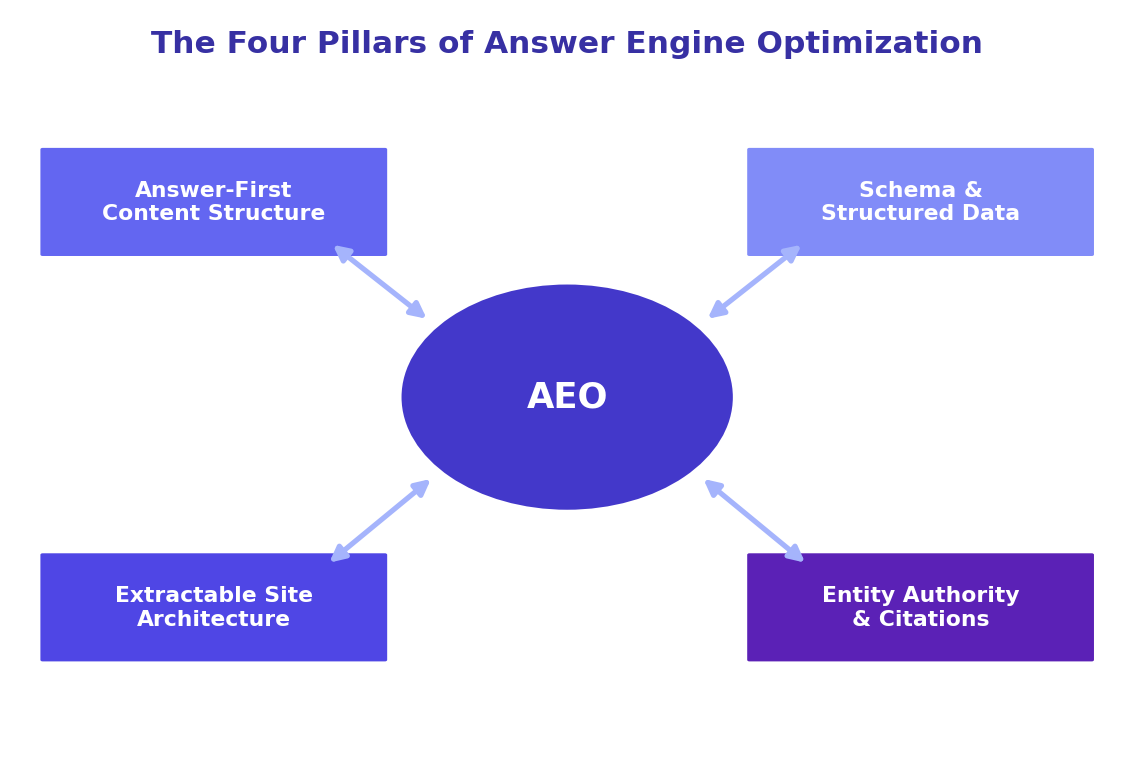
Answer engine optimization is the discipline of making your brand the answer, not just a result. Instead of asking "how do we rank for this keyword?", AEO asks three sharper questions. Can an AI engine extract a clear answer from our content? Will it trust us enough to cite us as the source? And will it recommend our brand when a buyer asks what to choose?
Winning at AEO comes down to four pillars.
Pillar 1: Answer-First Content Structure
AI engines extract answers, so your content must contain them in extractable form. Lead every section with the direct answer, then elaborate. Use question-based headings that mirror how buyers actually ask. Keep definitions crisp and self-contained, because a model quoting your page will lift one or two sentences, not seven paragraphs. If your best insight is buried in the middle of a story, the engine will cite whoever stated it plainly.
Pillar 2: Schema and Structured Data
Schema markup is how you speak to machines in their native language. Article, FAQPage, HowTo, Product, and Organization schema tell AI systems exactly what your content is, who wrote it, and what questions it answers. FAQPage schema in particular maps one-to-one with how answer engines work: a question, and a clean, quotable answer. Brands with comprehensive structured data are simply easier to extract and safer to cite.
Pillar 3: Extractable Site Architecture
AI crawlers reward clarity. That means a logical hierarchy where every page has one clear topic, clean HTML with semantic headings, fast load times, and internal links that establish which page is your definitive answer for each subject. Sprawling pages that cover ten topics at once confuse extraction. One page, one question, one authoritative answer is the architecture answer engines love.
Pillar 4: Entity Authority and Citations
AI engines do not just evaluate pages. They evaluate entities: your brand as a concept. When your company is consistently described the same way across your site, review platforms, directories, press coverage, and industry publications, models learn what your brand is and what it is best at. Third-party mentions act like votes of confidence. The more trusted sources associate your brand with a topic, the more likely an engine is to recommend you for it.
The Zero-Click Reality: Being the Answer Beats Being a Link
Here is the mindset shift that matters most. In the SEO era, the goal was traffic. In the AEO era, the goal is presence inside the answer. When Perplexity cites your comparison guide, when ChatGPT names your product as a strong option, when a Google AI Overview quotes your definition, you have won the moment of discovery, even if no click occurs.
That presence compounds. Buyers arrive at your site already convinced, because a neutral-seeming AI recommended you. Sales calls start warmer. Branded search grows. The brands that treat AI answers as their new front page will own the next decade of demand.
How Collide Approaches AEO Strategy
This is the thinking behind Collide's AEO strategy services. Collide does not treat AI visibility as a bolt-on to old SEO. It rebuilds the foundation: restructuring site architecture so every key question has one extractable, authoritative page; deploying comprehensive schema so AI models can parse and cite your content confidently; and building the entity authority that makes engines recommend your brand by name. The outcome is measurable: your brand showing up inside the answers your buyers are already reading.
Your AEO Migration Roadmap
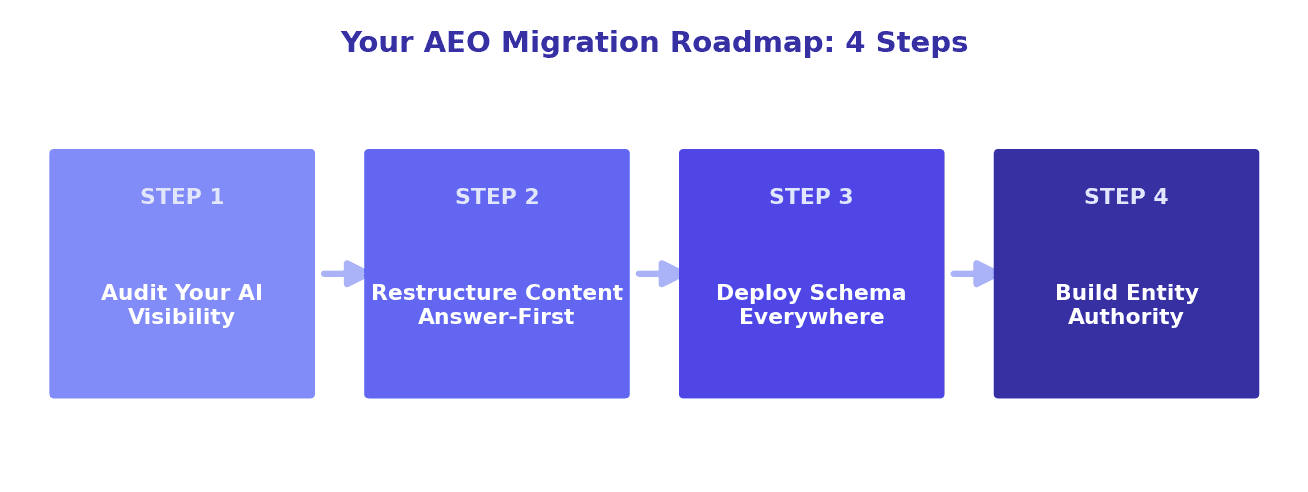
You do not need to abandon SEO overnight. You need to extend it. Follow these four steps.
Step 1: Audit Your AI Visibility
Ask ChatGPT, Perplexity, and Google the twenty questions your buyers ask most. Record who gets cited and who gets recommended. If your competitors appear and you do not, you have found your gap. This audit becomes your baseline for measuring progress.
Step 2: Restructure Content Answer-First
Rewrite your highest-value pages so every section leads with a direct, quotable answer under a question-based heading. Break sprawling pages into focused ones. Your goal is simple: any paragraph an AI lifts from your site should stand alone as a complete, accurate answer.
Step 3: Deploy Schema Everywhere
Add Article and Organization schema site-wide, FAQPage schema to every question-answering page, and Product or HowTo schema where relevant. Validate it, keep it synchronized with visible content, and treat structured data as a first-class part of publishing, not an afterthought.
Step 4: Build Entity Authority
Pursue consistent brand mentions across review platforms, directories, podcasts, and industry publications. Standardize how your brand is described everywhere it appears. Encourage detailed customer reviews. Every trusted external mention teaches AI engines to associate your brand with your category.
Measuring AEO: The New Scoreboard
Rankings alone no longer tell the story. Track AI citation share: how often engines cite you for your priority questions. Track share of voice in AI answers against competitors. Track AI referral traffic from ChatGPT, Perplexity, and Overview links. And track branded search growth, because being recommended inside answers sends buyers looking for you by name.
Conclusion
Keyword density belonged to an era when machines counted words. That era is over. AI engines read, understand, and choose, and they choose the brands whose content is structured to be extracted, whose schema makes them legible, and whose authority makes them safe to recommend.
The question is no longer "what do we rank for?" It is "what are we the answer to?" Answer that deliberately, build the architecture behind it, and your brand stops competing for clicks and starts owning the conversation itself.