
Imagine walking into a local store where the owner knows your name. They also know your favorite snacks, your clothing size, and your budget. Now, imagine this happening online for millions of customers at the same time. This is the power of hyper-personalization.
In the past, brands sent the same message to everyone. Today, AI-driven marketing changes everything. Businesses can now tailor every message, product offer, and interaction to each individual. This guide shows you how to use these smart tools to grow your business and connect with your audience.
The Shift from Traditional Personalization to Hyper-Personalization
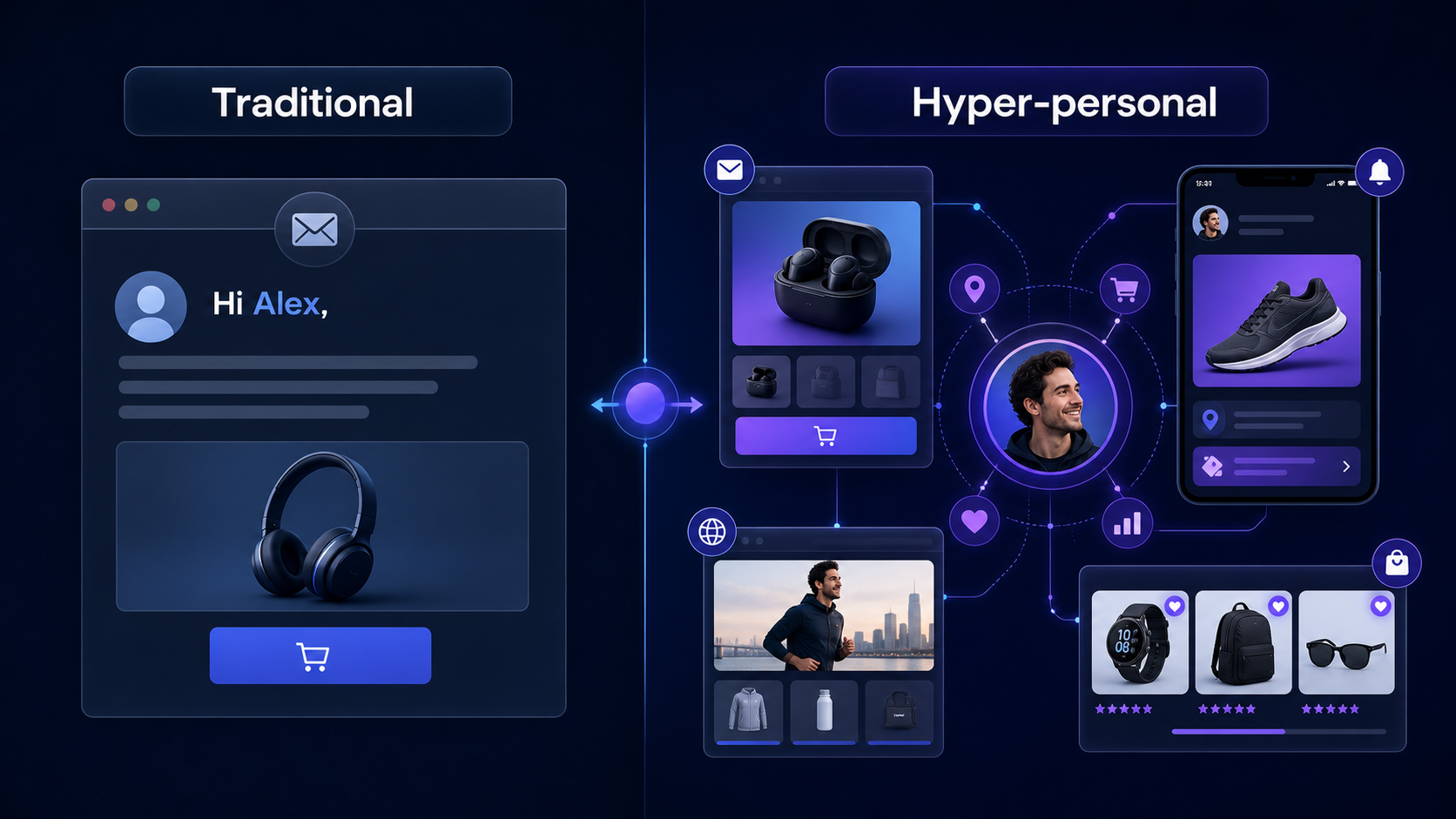
Many marketers confuse basic personalization with hyper-personalization. Basic personalization uses static data like a customer's first name, birthday, or location. It feels nice, but it does not drive deep engagement anymore. Customers now expect brands to understand their immediate needs.
Hyper-personalization goes much deeper. It uses real-time data, browsing history, and purchase context to predict what a user wants right now. We call this traditional personalization vs hyper-personalization.

Core Technologies Powering Hyper-Personalization
How do brands achieve this level of detail? They rely on advanced technology. At the center is machine learning in digital marketing. These smart algorithms look at millions of data points in seconds.
They track real-time customer behavior across your website and mobile app. The system learns what products a user views, how long they linger, and when they usually buy.
The AI then uses this data to change your website layout or send a custom discount. This happens instantly, while the customer is still browsing your store.
The Role of Customer Data Platforms (CDPs) and Predictive Analytics
To personalize at scale, you must break down your data silos. This is where customer data platforms (CDPs) come into play. A CDP gathers data from your website, mobile app, offline stores, and customer service tools. It builds a single, unified profile for every customer.
Once your data is in one place, you can use predictive analytics in marketing. Instead of looking only at past actions, predictive models guess what your customer will do next.
For example, the system can flag a customer who is about to stop buying. It then triggers a special offer to keep them happy. You can read more about this in our blog post about predictive analytics in modern marketing.
Why Hyper-Personalization in AI Marketing is the Future
Modern consumers do not just prefer custom content; they demand it. They expect brands to understand their unique needs instantly. Delivering hyper-personalized customer experiences is no longer a luxury. It is a vital tool for business survival.
This trend is especially true for AI marketing in India. The Indian market is highly diverse, with millions of new internet users joining every year. Brands must speak to customers in their own languages and on their preferred devices.
If you send generic messages, your audience will ignore you. But if you show them exactly what they need, you build deep loyalty.
Why Hyper-Personalization Matters for the Indian Market
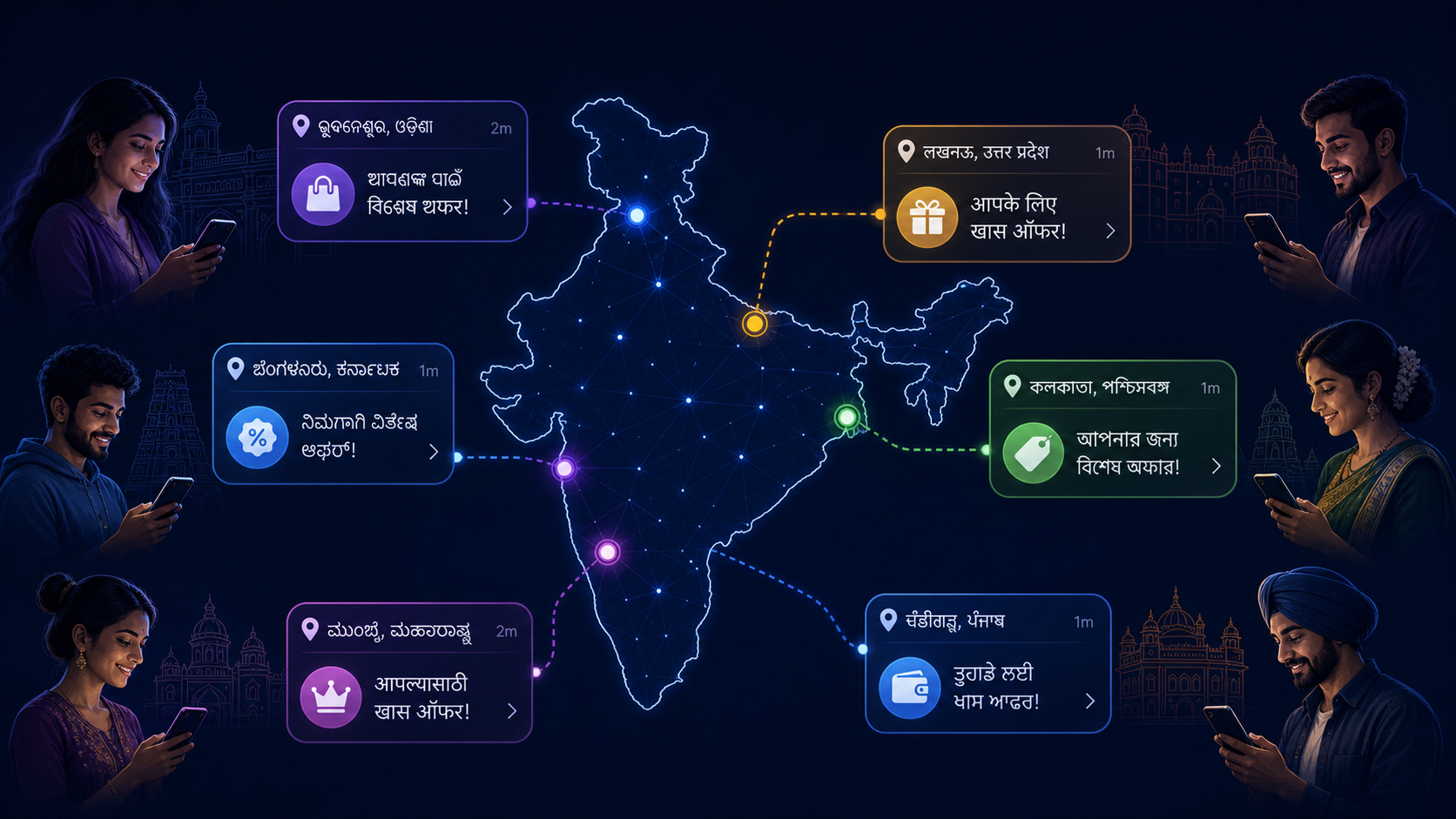
India has a unique digital landscape. It is a mobile-first market where most people access the web on smartphones. Many users also prefer regional languages over English.
This means brands cannot use a one-size-fits-all approach. You must tailor your marketing to regional tastes, local festivals, and local languages.
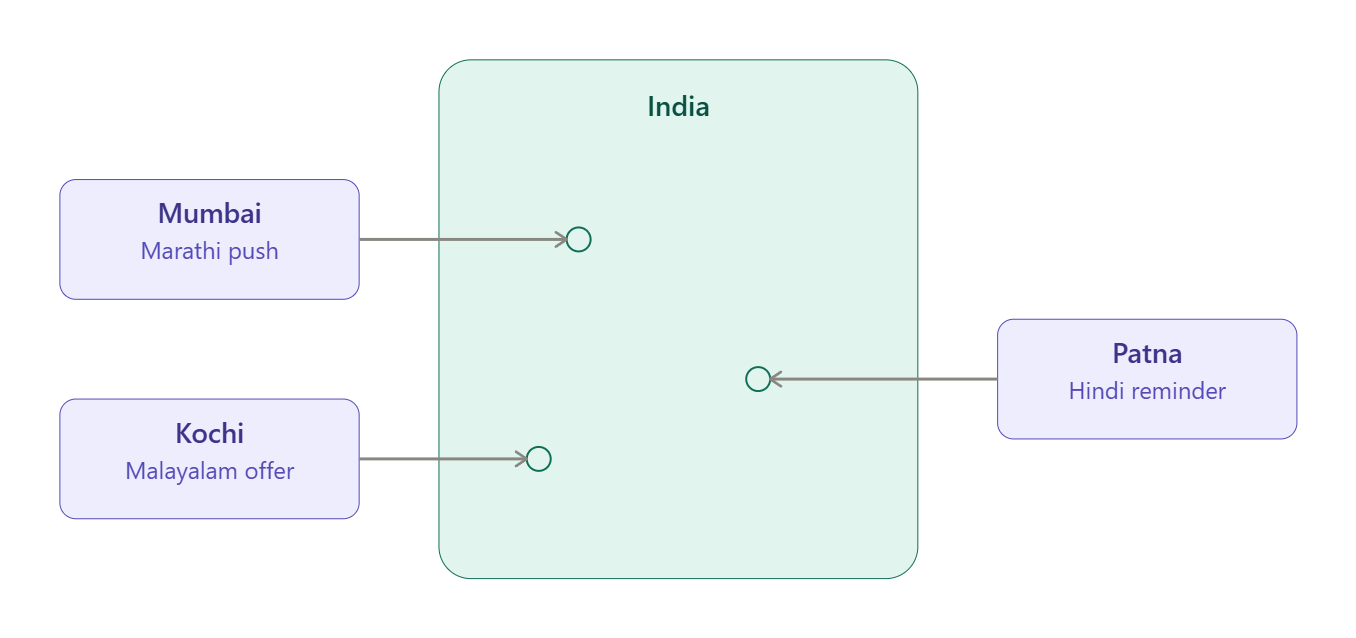
AI helps you translate and adapt your content automatically. It ensures your message feels personal, whether your customer lives in Mumbai, Kochi, or Patna.
Industry Use Cases: E-Commerce and Retail in India
E-commerce brands in India are leading the charge. They use AI to recommend products based on local weather, regional holidays, and past browsing habits.
Let us look at a local Indian fashion brand. They wanted to boost sales during the Diwali season. Instead of sending a general discount code, they used AI to analyze user behavior.
The AI noticed that shoppers in North India searched for traditional ethnic wear. At the same time, shoppers in South India preferred silk sarees. The brand customized its homepage banners and push notifications for each user. This simple shift in strategy boosted their sales by 35 percent.
Industry Use Cases: Banking, Fintech, and Healthcare in India
Fintech and digital healthcare brands also see massive success with AI. India's UPI-based payment ecosystem creates a lot of transactional data. Smart brands use this data to offer timely financial services.
A popular Indian fintech app used AI to analyze UPI transaction patterns. The app noticed when users paid their rent or utility bills each month.
Just before the due date, the app sent a personalized reminder with a quick payment link. It also offered small, custom personal loans to users who needed extra cash. This proactive approach increased loan sign-ups by 40 percent.
In healthcare, apps use AI to send medicine reminders and suggest health checkups. These small touches build trust and keep users engaged.
Key Benefits of AI-Driven Personalization for Brands
Implementing personalized marketing automation brings massive rewards. First, it increases your conversion rates. When customers see products they actually want, they buy faster.
Second, it improves customer retention. People stay loyal to brands that make shopping easy and relevant.
Finally, it lowers your marketing costs. Instead of wasting money on broad, expensive ads, you target the right people with the right message. Your return on ad spend rises quickly.
Major Challenges and Data Privacy (DPDP Act) in India
While AI marketing offers big rewards, it also brings challenges. The biggest challenge is data privacy in AI marketing.
India recently passed the Digital Personal Data Protection (DPDP) Act. This law requires brands to get clear consent before collecting or using customer data. You must tell users exactly what data you collect and how you plan to use it.
Marketers must balance personalization with privacy. If you cross the line, you risk heavy fines and loss of trust. To learn how to stay compliant, read our blog post about navigating data privacy laws in digital advertising.
Step-by-Step Implementation Strategy for Businesses
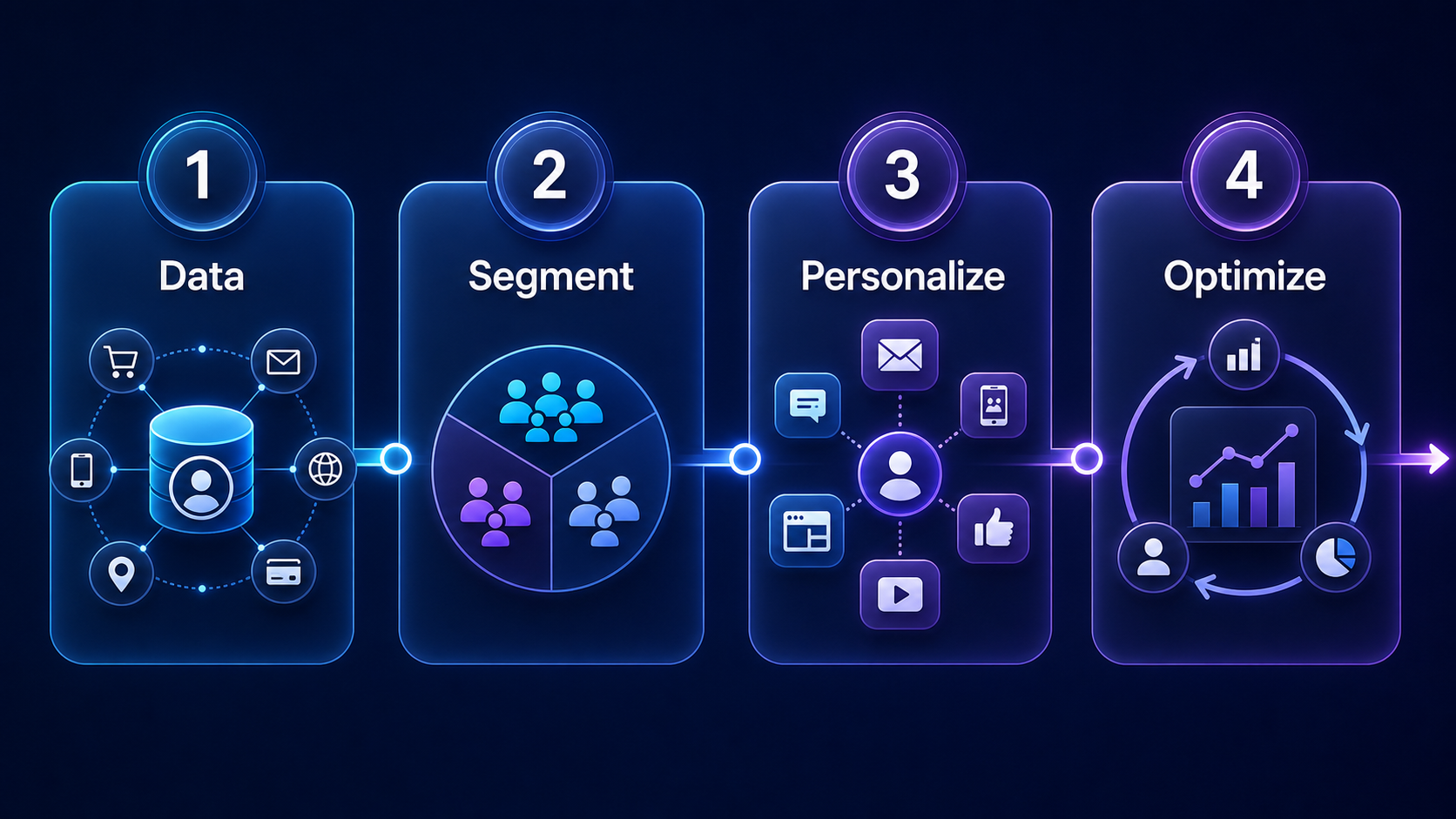
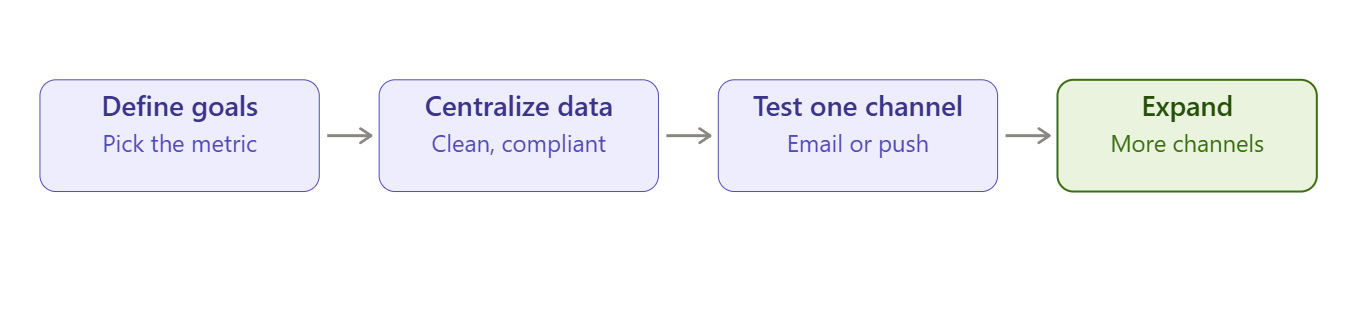
Setting up an AI-driven marketing system can feel overwhelming. However, you can succeed by taking a step-by-step approach. Here is a practical roadmap for Indian mid-market enterprises.
Decide what you want to achieve. Do you want to reduce cart abandonment or increase email open rates?
Gather your customer data into a central system. Ensure your data is clean, accurate, and compliant with local laws.
Choose one channel to test, like email or push notifications.
Once you see results, expand to other channels and use more advanced AI models.
A wellness brand started by personalizing just their post-purchase emails. They suggested vitamins based on what customers bought. After seeing a 20 percent rise in repeat purchases, they expanded AI personalization to their website and SMS campaigns.
How Collide Solutions Simplifies Hyper-Personalization at Scale
Many mid-market brands worry about the cost of building these systems. They do not have massive IT budgets or teams of data scientists. Fortunately, you do not need them.
You can leverage AI automation platforms like Collide Solutions to scale your marketing without massive upfront tech debt. Collide Solutions offers easy tools that connect your data and automate your campaigns.
It helps you track user behavior, build customer profiles, and send personalized messages across channels. You can explore our services page for AI-driven marketing automation solutions to see how we can help your business grow.
To see real results from brands like yours, check out our case studies page showcasing customer experience transformation.
Conclusion and Next Steps for Marketers
Hyper-personalization is no longer a trend for the future. It is a vital tool for today. By using AI, machine learning, and real-time data, you can build deeper relationships with your customers.
Do not let data privacy laws or technical challenges hold you back. Start with small, smart steps. Partner with platforms like Collide Solutions to simplify your journey.
Are you ready to transform your marketing? Start building your hyper-personalized strategy today and watch your business grow.